Understanding Descriptive vs Distinctive Trademarks
Choosing a trademark is a crucial decision for any business, especially for those in the SaaS industry. The terms “descriptive vs distinctive trademark” often arise when discussing trademark strategy. Understanding these concepts is key to ensuring your brand is legally protected and stands out in the marketplace. For more on trademark symbols TM vs R, see our detailed guide.
Trademarks can be classified along a spectrum of distinctiveness, ranging from generic to fanciful. Knowing where your brand name falls on this spectrum can help you determine its likelihood of being protected by trademark law. For more on domain name and trademark rights, explore their key differences.
The Spectrum of Distinctiveness
Trademarks fall into categories based on how unique or descriptive they are:
-
Generic: These are common words for products or services, like “Computer” for a computer brand. Generic terms are not eligible for trademark protection because they refer to the product itself, not the source.
-
Descriptive: These terms describe a feature, quality, or characteristic of a product or service. “QuickBooks” for accounting software is an example. Descriptive marks are generally not protectable unless they acquire distinctiveness (secondary meaning) through extensive use. Learn about the risks of using a dead trademark.
-
Suggestive: These marks hint at a product’s nature or quality without directly describing it. “Netflix” suggests a network of films but does not describe the service directly, making it more protectable.
-
Arbitrary: Common words used in a way unrelated to their usual meaning, like “Apple” for computers. Arbitrary marks are inherently distinctive and generally easier to protect.
-
Fanciful: Completely invented words with no prior meaning, such as “Kodak”. These are the most distinctive and are afforded strong protection.
Why Generic SaaS Names Are Hard to Protect
SaaS companies often face challenges in trademark protection because their names tend to be descriptive or generic. For example, a name like “DataManage” might straightforwardly convey the function of the software but lacks the uniqueness required for strong legal protection. Learn how to rebrand after a trademark dispute.
Challenges of Descriptive Trademarks
-
Limited Protection: Descriptive trademarks, like “DataManage”, require proof of secondary meaning to achieve protection. This means the public must associate the term with your brand specifically, not just the service.
-
Market Confusion: Descriptive names can easily be confused with competitors offering similar services, leading to brand dilution. Learn more about the likelihood of confusion in trademarks.
-
Legal Hurdles: Convincing a trademark office or court that a descriptive name should be protected can be difficult and costly.
Benefits of Distinctive Trademarks
-
Strong Protection: Distinctive marks, such as arbitrary or fanciful names, are much easier to protect legally.
-
Market Differentiation: Unique names help a brand stand out in a crowded market, making it easier for customers to remember and find you.
-
Legal Advantage: If a competitor tries to use a similar name, you’re in a stronger position to argue against it.
Protecting Your SaaS Brand Effectively
To navigate the complexities of trademark law, especially in the SaaS field, companies should prioritize choosing distinctive names. Here are some strategies to consider: learn how to name a startup without legal trouble.
-
Invent New Words: Create a new word or modify an existing one, ensuring it’s unique and memorable.
-
Use Arbitrary Terms: Select common words unrelated to your product or service, which can be highly distinctive when applied to your brand.
-
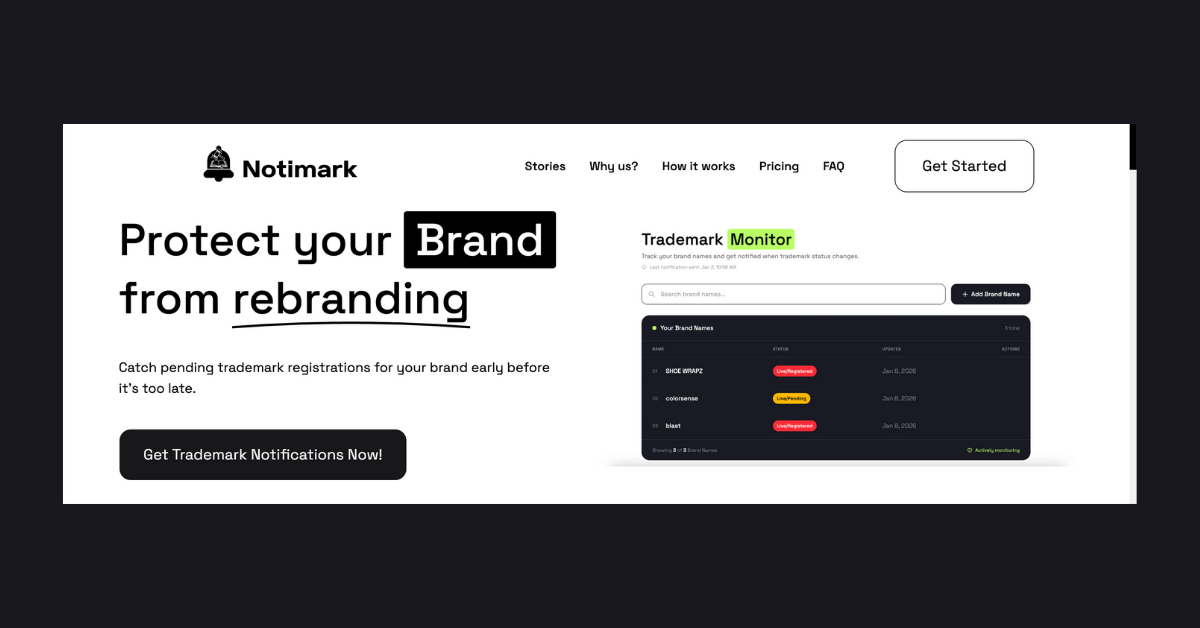
Monitor Trademarks: Engage a service like Notimark to keep tabs on newly filed or pending trademarks that might conflict with yours. This helps you act early to oppose potentially infringing marks.
-
Legal Consultation: Work with a trademark attorney to ensure your chosen name is not only distinctive but also legally viable.
FAQ
What is the difference between descriptive and distinctive trademarks? Descriptive trademarks describe a product or service characteristic, while distinctive trademarks are unique and not directly related to the product, making them easier to protect.
Why are generic SaaS names hard to protect? Generic SaaS names often lack distinctiveness and are more descriptive, making them ineligible for trademark protection without proving secondary meaning.
How can I make my SaaS brand name more distinctive? Consider creating a new word, using arbitrary terms, or modifying an existing word to ensure a unique and memorable brand identity.
Why should I monitor trademarks? Monitoring trademarks with services like Notimark helps identify potential conflicts early, allowing you to oppose infringing marks and safeguard your brand.
