When you’re creating a new product, deciding whether you need a trademark, copyright, or patent can be confusing. Understanding these types of intellectual property protection helps ensure you choose the right one for your needs. For insights on trademark infringement examples and lessons, explore our detailed guide.
What is a Trademark?
A trademark protects brand names, logos, and slogans used to identify goods or services. Think of it as a way to protect your brand identity. If you have a unique name or symbol associated with your product, you may want to register it as a trademark. This can prevent others from using a similar name that might confuse customers. Learn more about common law trademark rights.
Benefits of a Trademark
- Brand Recognition: Helps customers distinguish your product from others.
- Legal Protection: Gives you the right to take legal action against unauthorized use.
- Asset Value: Can increase your business’s value as a recognized brand.
What is Copyright?
Copyright protects original works of authorship. This includes literature, music, and art. It gives you the exclusive right to reproduce, distribute, and display your work. For product makers, copyright might be relevant if you’ve created original content, such as a user manual, artwork, or software.
Benefits of Copyright
- Control Over Use: Decides who can copy or display your work.
- Duration: Lasts for the life of the author plus 70 years, offering long-term protection.
- Automatic: Protection begins as soon as the work is created and fixed in a tangible form.
What is a Patent?
A patent is for inventions. It grants the inventor exclusive rights to their product or process for a limited time, usually 20 years. To get a patent, your invention must be new, useful, and non-obvious. This is crucial for product makers with a unique invention.
Benefits of a Patent
- Exclusive Rights: Prevents others from making, using, or selling your invention.
- Competitive Advantage: Secures a market edge by blocking competitors.
- Potential Revenue: Can license the patent to others for royalties.
Trademark vs Copyright vs Patent: Which Do You Need?
Choosing between a trademark, copyright, and patent depends on what you’re trying to protect. If your trademark application faces opposition, learn how to handle trademark opposition at the TTAB.
- Use a Trademark if you want to secure your brand name, logo, or slogan.
- Opt for Copyright if you’ve created original written or artistic works.
- Consider a Patent if you’ve invented something new or improved a process.
Sometimes, you might need more than one type of protection. For example, a new product could have a patent for its invention, a trademark for its brand, and copyright for its instruction manual.
Monitoring Your Trademark
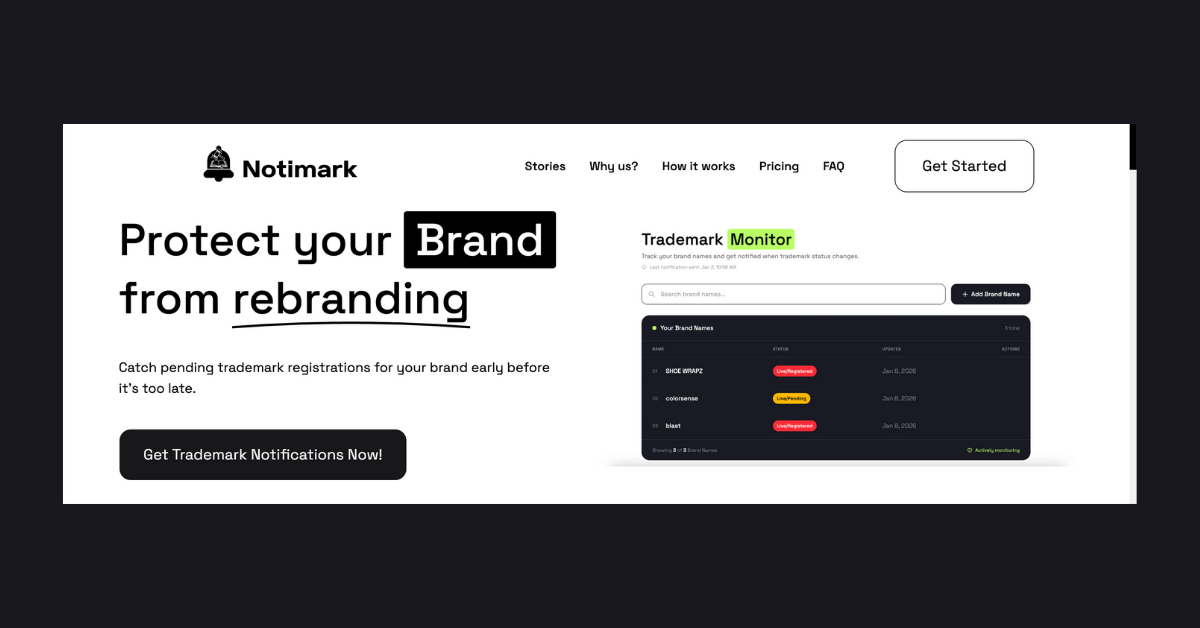
Once you have a trademark, keeping an eye on potential infringements is crucial. Using a service like Notimark can help you monitor for new or pending trademarks that might infringe on yours. This allows you to take timely action, such as opposing a pending mark or avoiding conflicts.
FAQ
What is the difference between a trademark, copyright, and patent?
Trademarks protect brand identities, copyrights protect original works of authorship, and patents protect inventions. Each serves a unique purpose based on what you need to protect.
Can I get all three protections for one product?
Yes, you can. A product may be protected by a patent for its invention, a trademark for its brand, and copyright for any written or artistic content associated with it.
How long does each type of protection last?
Trademarks can last indefinitely with proper renewal, copyrights last for the life of the author plus 70 years, and patents typically last 20 years from the filing date.
Do I need to register a copyright?
Registration is not required for copyright protection, as it’s automatic upon creation. However, registering can provide legal advantages if you need to enforce your rights.
