Common law trademark rights are an important but often misunderstood aspect of trademark protection. Unlike registered trademarks, which require a formal application process with the United States Patent and Trademark Office (USPTO), common law trademark rights arise automatically when you use a name, logo, or slogan in commerce. These rights can offer significant protection, but they also come with limitations.
What Are Common Law Trademark Rights?
Common law trademark rights are the rights you acquire simply by using a trademark in connection with your goods or services. These rights are not dependent on registration and are based on the principle of “first use.” If you are the first to use a trademark in a particular geographic area, you can claim common law rights to that mark in that area.
Key Characteristics
- Automatic Protection: Common law rights are established through use, not registration.
- Geographic Limitation: These rights are typically limited to the geographic area where the mark is used.
- First Use Priority: Priority is granted to the first entity to use the mark in commerce.
- Limited Scope: Protection may not be as extensive as registered trademarks.
The Benefits of Common Law Trademark Rights
While common law rights may seem less powerful than registered ones, they do offer some important advantages:
- Cost-Effective: You don’t need to pay registration fees or go through a formal process to establish these rights.
- Immediate Protection: As soon as you start using the mark in commerce, you gain protection.
- Legal Standing: You can use common law rights to challenge another party’s use of a similar mark in your area. Learn about the likelihood of confusion trademark test.
The Limitations of Common Law Trademark Rights
Understanding the limitations of common law rights is crucial for effective brand protection: learn about common reasons for trademark application rejection.
Geographic Scope
Common law rights are limited to the area where you have established a market presence. This means that if another business begins using a similar name in a different region, your common law rights may not extend to that area.
Proof of Use
To enforce your common law rights, you must be able to prove that you were the first to use the mark in commerce. This often requires documentation such as invoices, advertising materials, or dated website content.
No Nationwide Protection
Unlike federally registered trademarks, which provide nationwide protection, common law rights are confined to your specific market area. This can make it challenging to expand your business or defend your mark in new regions. Learn more about trademark renewal deadlines.
Enhancing Common Law Rights with Registration
While common law rights provide a foundation of protection, registering your trademark with the USPTO can offer additional benefits: Learn more about comparing trademark, copyright, and patent protection.
- Nationwide Rights: A registered trademark provides exclusive rights across the entire United States.
- Evidentiary Advantages: Registration offers legal presumptions of ownership and validity, making it easier to enforce your rights.
- Deterrence: A federally registered trademark can serve as a deterrent to potential infringers.
The Role of Trademark Monitoring
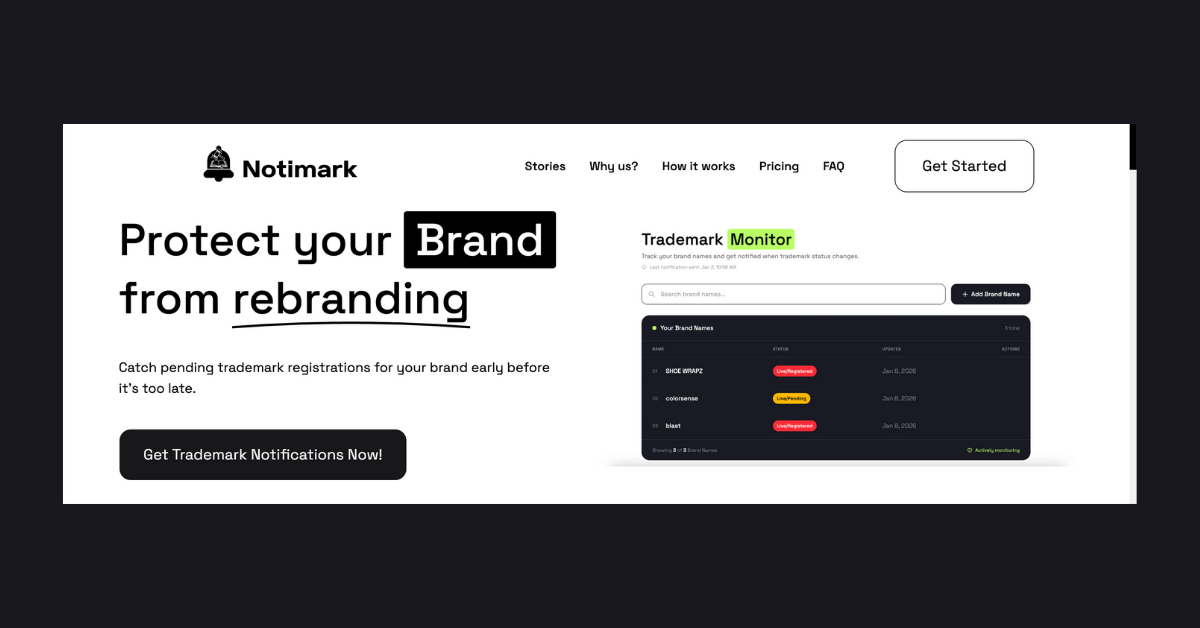
Monitoring your trademark is crucial to ensuring your brand’s protection, especially if you rely on common law rights. Trademark monitoring services like Notimark can help you keep track of new or pending trademarks that might conflict with your brand, allowing you to act quickly to oppose them if necessary.
FAQ
What are common law trademark rights?
Common law trademark rights are protections that arise automatically from the first use of a trademark in commerce, without the need for registration.
How are common law trademark rights limited geographically?
These rights are generally limited to the geographic area where you have established a market presence, unlike registered trademarks that offer nationwide protection.
Can common law rights be enforced in court?
Yes, but you’ll need to provide evidence of first use and market presence to enforce these rights in legal disputes.
How does trademark monitoring help with common law rights?
Trademark monitoring helps you identify potential conflicts early, allowing you to take action to protect your rights, even if you haven’t registered your trademark.
